
There is a particular kind of tomato you can only find in August. It is heavy in the hand, warm from the sun, and so ripe that it barely holds itself together. You eat it standing at the kitchen counter with nothing but a pinch of flaked salt and a glug of olive oil, and it tastes like summer made edible. No recipe. No technique. Just the fruit and the season and the moment.
That tomato is not available in January. Not a real one, anyway. What you find in January is a pale, hard, flavourless imitation — an object that resembles a tomato the way a photograph resembles a person. It looks the part but carries none of the soul.
Eating seasonally is, at its heart, the practice of eating the real thing. And for those of us who have chosen a plant-based life, it is one of the most profound ways to deepen that choice — to move beyond simply eating without animal products and towards eating in genuine harmony with the natural world.
How We Lost the Seasons
For most of human history, seasonal eating was not a philosophy — it was simply reality. You ate what the land produced, when it produced it. Preservation techniques — fermenting, pickling, drying, storing root vegetables in cool cellars — extended the larder through winter, but the fundamental rhythm of the table was set by the earth itself.
The 20th century broke that rhythm. Refrigerated shipping, global supply chains, and industrial agriculture made it possible to eat strawberries in December and butternut squash in May. The supermarket became a space outside of time — every aisle of every season always available, always the same. This was sold as progress, and in many ways it was. Food security improved. Variety increased. Prices fell.
But something was lost too. The anticipation of the first asparagus of spring. The particular pleasure of the first bowl of warming butternut soup as the nights draw in. The way flavour is heightened by waiting. When everything is always available, nothing is special.
"To eat seasonally is to place yourself back inside the year — to feel the turn of the world through what is on your plate."
Why Seasonal Plant-Based Food Tastes Better
Flavour in fruit and vegetables is largely a product of ripeness, and ripeness is a product of time spent developing naturally in the right conditions. A strawberry grown in its correct season — June in the UK, May in southern Europe — has had weeks of lengthening days and warming soil to develop its sugars, its fragrance, its deep red colour throughout. A strawberry grown under artificial lights in a heated polytunnel in February has had none of that. The biological processes that create flavour simply haven't had the chance to complete themselves.
There is also the question of distance. Produce grown and eaten locally in season travels hours, not days. It arrives at the table still alive in the truest sense — still releasing the volatile compounds that give fresh food its brightness and complexity. Produce that has spent days in a refrigerated container crossing continents arrives muted, its finest qualities already fading.
This is not sentiment. It is chemistry. And it is why a carrot pulled from the ground in October and roasted that evening will always taste more profoundly of itself than a carrot that left a farm in another country a fortnight ago.
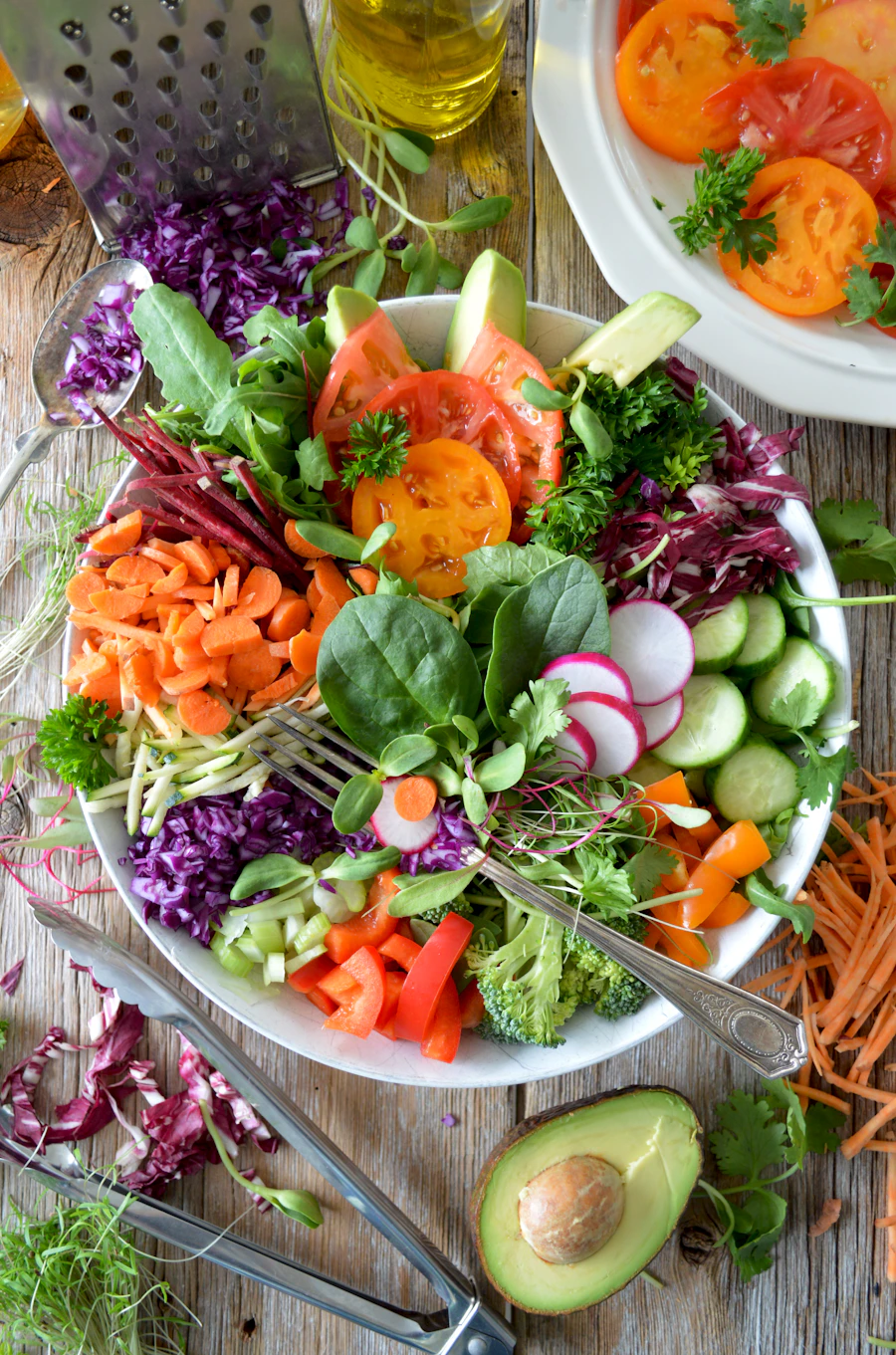
Seasonal produce at its peak — no enhancement needed.
The Seasons as a Creative Framework
One of the unexpected joys of committing to seasonal eating is what it does to your cooking. Constraints, it turns out, are extraordinarily generative. When you cannot reach for a courgette in February or a parsnip in July, you are forced to work more deeply with what is available — and in doing so, you discover techniques, combinations and flavours you would never have found by shopping without limits.
Winter teaches you the profound satisfaction of slow cooking: long-braised roots, silky bean stews, the transformation that heat and time perform on humble ingredients. Spring teaches you the joy of restraint — the season's first vegetables are so vibrant they need almost nothing, and the best cook is the one who knows to step aside. Summer is abundance and improvisation: the overflowing bowl of tomatoes demands to be used today, not tomorrow. Autumn is harvest and preservation — the most creative season of all, when the impulse to capture the year's best flavours drives you to ferment, pickle, and store.
🌱 Spring
- Asparagus
- Wild garlic
- Spring greens & spinach
- Radishes & peas
- Jersey Royals
- Rhubarb
☀️ Summer
- Tomatoes & courgettes
- Runner beans & broad beans
- Sweetcorn & peppers
- Cucumber & aubergine
- Strawberries, cherries, peaches
- Fresh herbs in abundance
🍂 Autumn
- Squash & pumpkin
- Wild mushrooms
- Apples, pears & plums
- Kale, chard & cavolo nero
- Leeks & beetroot
- Walnuts & chestnuts
❄️ Winter
- Celeriac & parsnips
- Purple sprouting broccoli
- Brussels sprouts & red cabbage
- Citrus fruits
- Stored root vegetables
- Forced chicory & endive
Eating Seasonally on a Budget
There is a persistent myth that eating well — locally, seasonally, from quality sources — is expensive. It can be. But it doesn't have to be, particularly for those eating plant-based. The economics of seasonal produce are simple: when something is in abundant supply, it is cheap. A glut of courgettes in August means they are practically given away at farmers' markets and greengrocer shops. The same courgette in March, imported and out of season, costs three times as much and tastes half as good.
Root vegetables — parsnips, carrots, turnips, swede — are among the cheapest foods available throughout autumn and winter, and among the most nutritionally rich. Cabbage, kale, and other brassicas are similarly affordable and extraordinarily versatile. The idea that seasonal, local eating is a luxury is largely a marketing invention of an industry that profits from making you desire things regardless of whether they are in season.
A Different Relationship with Food
Perhaps the deepest gift of seasonal eating is what it does to your relationship with food itself. When you eat with the seasons, food stops being a commodity — an interchangeable product available at any time from any place — and becomes something closer to what it has always been throughout human history: a gift from a particular place, at a particular moment, that will not come again until the wheel of the year turns once more.
This is not nostalgia. It is not a rejection of the genuine advantages of global food systems. It is simply a recognition that food has meaning beyond calories and convenience, and that tuning into the rhythm of the seasons is one of the most direct ways to feel that meaning in your daily life.
🌿 Where to start: Visit a farmers' market this weekend — not to buy a specific thing, but to see what is there and let that guide your cooking. Buy what looks most alive. Take it home and cook it simply. That is seasonal eating in its purest form.
The seasons will always be turning, whether we notice them or not. Seasonal eating is simply the choice to pay attention — to let the natural world set the menu, and to discover, again and again, that it always knows best.
Looking for seasonal inspiration? Browse our full recipe collection →


